
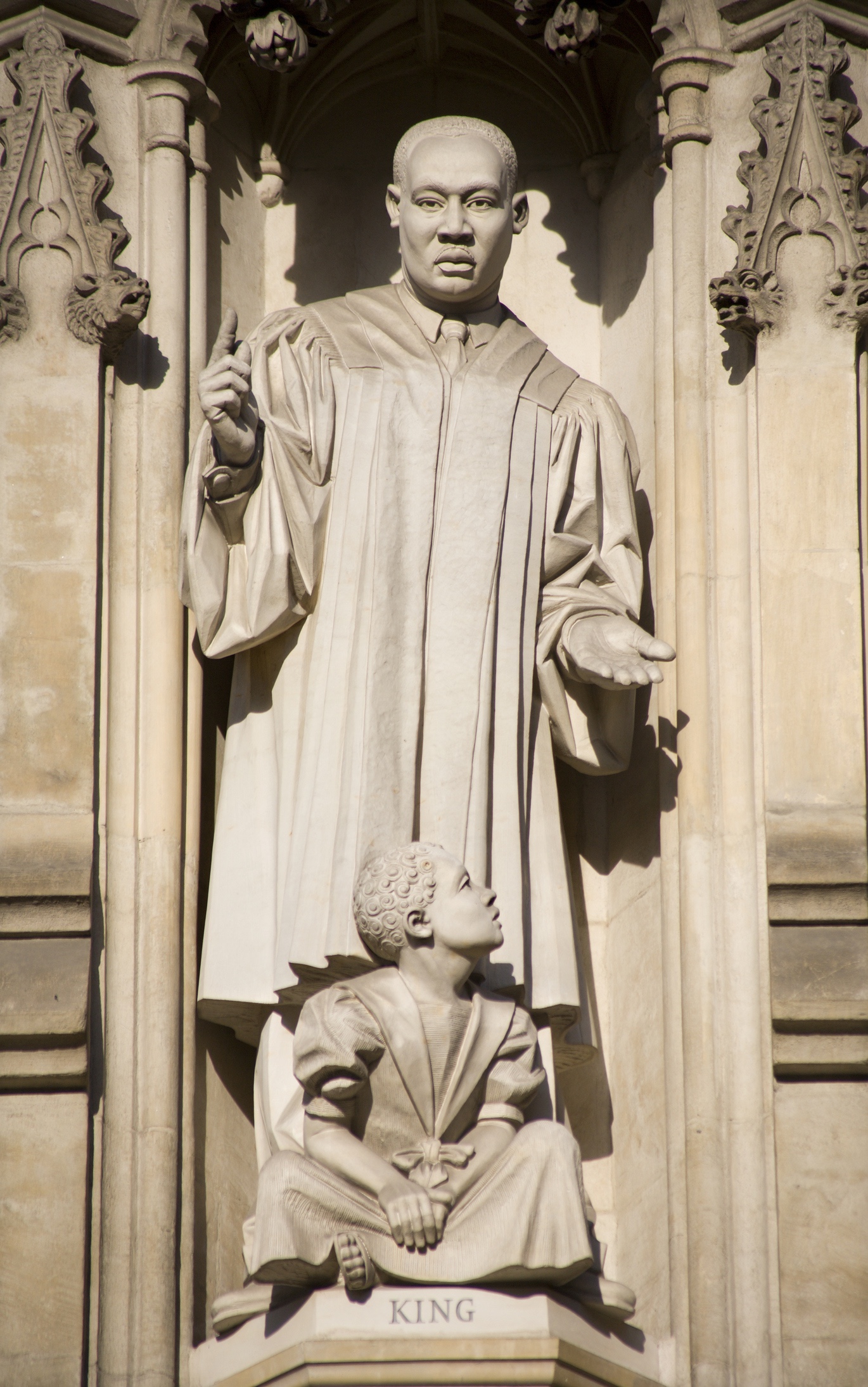
In the United States, the birthday of Martin Luther King Jr. is celebrated on the third Monday of January. It’s a federal holiday, and government offices, schools and banks are closed. Here in Canada, Toronto recognizes the day, although most businesses and government offices remain open. King was important to the civil rights fight in the United States, but his legacy is international. He insisted on social change and asked the government to re-prioritize its efforts to focus on Americans instead of a war around the world.
It was 1967, Canada’s 100th birthday, when King was invited to speak at the Massey Lectures, an annual series dedicated to thinkers and philosophers. Here’s just one section from the famous lecture penned by King:
“Canada is not merely a neighbor to Negroes. Deep in our history of struggle for freedom Canada was the north star. The Negro slave, denied education, de-humanized, imprisoned on cruel plantations, knew that far to the north a land existed where a fugitive slave if he survived the horrors of the journey could find freedom. The legendary underground railroad started in the south and ended in Canada. The freedom road links us together.”
Janet Somerville, who would go on to become the General Secretary of the Canadian Council of Churches, believed King was a living prophet. She worked with King to record his message to the Canadian people, and a friendship was forged. In January 1968, King would ask her to come to America and work with him to “heal a sick nation.” Somerville deferred the appointment, requesting until fall to make a decision.
Just three months later, in April, King was assassinated. Somerville said the man was instrumental to finding her path in the church. Canada was a safe haven for African-Americans during the Civil War of the United States, and our country has fought for civil rights for all for a long time.
King’s Legacy
In 1964, King was awarded the Nobel Peace Prize. At the time, he was the youngest person to receive the award. He held at least 50 honorary doctorates and degrees from universities around the world. One is from Newcastle University, in the United Kingdom. He was the first African-American so honoured by the University. He was given a posthumous Presidential Medal of Freedom. Time magazine named him as the Person of the Year in 1963. Thirty-seven years later, he was listed as number six in the Person of the Century poll by the magazine.
His legacy is not limited to the United States, although he does have many monuments, schools and landmarks in his honor. Internationally, he’s remembered for his activism. In New Delhi, India, a plaza commemorates King and Gandhi together. There’s a school named after King in Accra, Ghana. King and his wife, Coretta Scott King, both have forests named for them in Israel. In Debrecen, Hungary, there is a church named in his honour.
Do something this year in his memory. It might be something as simple as reading one of his speeches or biographies. Find the documentary “To Heal a Sick Nation” by Harry Belafonte, who was a close friend of King. The documentary delves into King’s activism.
Here’s another quote from King’s Massey Lecture:
“One of our spirituals, Follow the Drinking Gourd, in its disguised lyrics contained directions for escape. The gourd was the big dipper, and the north star to which its handle pointed gave the celestial map that directed the flight to the Canadian border. So standing today in Canada I am linked with the history of my people and its unity with your past.”
Our country is directly connected to the civil rights movement in the United States. We should remember this man who worked so hard.